Life beyond Earth continues to attract serious attention. Billionaires, private space companies, and national agencies are all investing in the idea of long-term human presence outside the planet. Reaching space is only one part of the challenge. The ability to sustain life there presents a deeper scientific question.
Human biology developed under Earth’s gravity over millions of years. Even small changes to that environment can disrupt essential bodily systems. Research has already shown that space conditions may damage kidneys, increase the risk of diseases such as cancer, and even influence DNA structure.
A recent study from researchers at Adelaide University highlights another unexpected challenge. Human reproduction itself may become more difficult in microgravity.
Gravity Plays a Role in Sperm Navigation
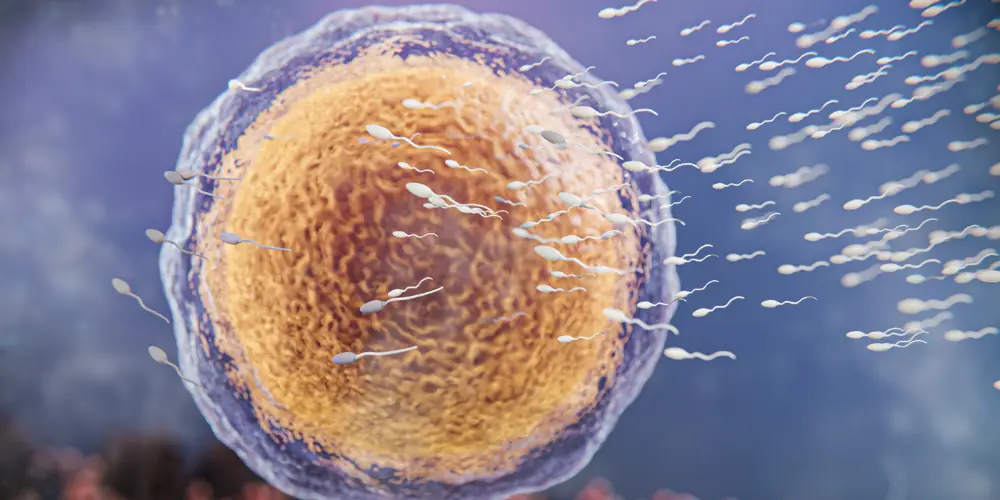
Scientists have long studied how sperm cells travel through the female reproductive tract. Their movement may appear simple, yet it involves chemical signals, physical guidance, and environmental factors. Gravity now appears to be one of those factors.
Nicole McPherson, a biomedical researcher at Adelaide University and co-author of the study published in the journal Communications Biology, explained the discovery clearly.
“This is the first time we have been able to show that gravity is an important factor in sperm’s ability to navigate through a channel like the reproductive tract,” McPherson said.
The finding suggests that reproduction in space may face biological barriers that scientists had not fully considered.
How Scientists Simulated Zero Gravity
Sending biological samples to orbit for experiments remains expensive and complicated. Instead, the research team used laboratory technology designed to imitate microgravity.
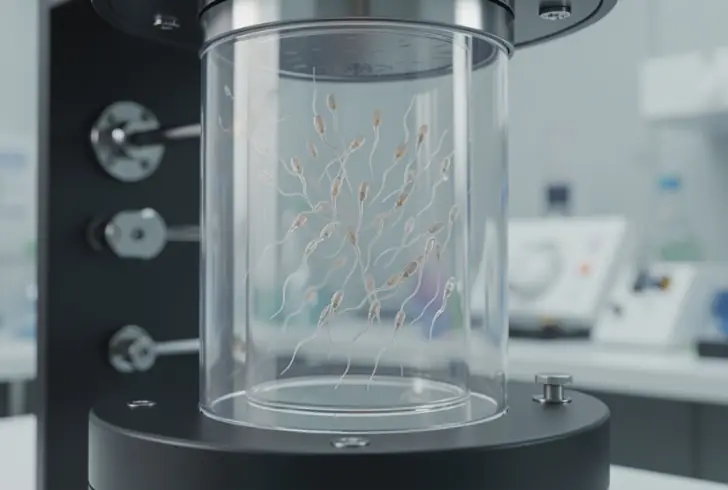
Researchers examined sperm from three mammals, including humans. The samples were placed inside a 3D clinostat machine, a device that constantly rotates and reorients cells. This movement removes the consistent gravitational direction that cells normally experience, creating conditions similar to zero gravity.
After the simulation began, the scientists introduced another element into the experiment. The sperm cells were placed inside a carefully designed artificial maze that resembled the female reproductive tract. Under normal gravity, sperm typically move through such pathways with relative efficiency.
The results in microgravity conditions looked very different.
Sperm Cells Lost Their Sense of Direction
The experiment revealed a noticeable decline in sperm navigation ability. Many sperm cells failed to locate the exit path in the artificial reproductive channel.
McPherson described the outcome in detail:
“We observed a significant reduction in the number of sperm that were able to successfully find their way through the chamber maze in microgravity conditions compared to normal gravity. This was experienced right across all models, despite no changes to the way sperm physically move.”
In simple terms, the cells still swam normally. Yet they struggled to orient themselves without the directional reference provided by gravity.
The results appeared consistently across all three mammalian models examined in the study.
Fertilization Rates Also Dropped
Navigation problems were not the only issue recorded during the experiment. Fertility levels also changed after exposure to simulated microgravity.
Mouse sperm exposed to zero-G conditions for four hours fertilized 30 percent fewer eggs than sperm under normal Earth gravity. The longer the sperm remained in the simulated space environment, the greater the decline in fertilization success.
This observation suggests that microgravity could interfere with several steps involved in reproduction, from sperm guidance to the fertilization process itself.
The study also uncovered a potential biological workaround. Researchers supplemented human sperm samples with progesterone, a hormone known for its role in pregnancy and reproductive signaling.
The addition produced a noticeable improvement in fertilization chances.
Progesterone plays an important role during natural conception. Eggs release the hormone, which helps guide sperm toward them. In the simulated microgravity environment, the extra progesterone appeared to strengthen that chemical guidance signal.
Even so, the researchers stressed that more studies are required before drawing firm conclusions about its effectiveness in space conditions.
Next Steps for Space Reproduction Research
The Adelaide University research team plans to continue investigating how different gravity environments influence reproduction. Future studies will focus on conditions that mimic planetary surfaces rather than complete weightlessness.
Areas of interest include the gravity conditions present on Mars, the significantly lower gravitational pull on the Moon, and the potential effects of artificial gravity systems that spacecraft may use during long-duration missions.
Scientists also plan to examine how embryos develop under these altered gravity conditions.
Understanding these biological responses will be essential if long-term space settlements become reality.
Current findings suggest that creating life in space could be more complicated than expected. Microgravity interferes with sperm orientation, reduces fertilization success, and introduces new variables into human reproduction.
At the same time, the results offer cautious optimism. Many embryos still formed successfully even when fertilization occurred under simulated space conditions.
McPherson summarized this hopeful aspect of the research:
“Many healthy embryos were still able to form even when fertilized under these conditions. This gives us hope that reproducing in space may one day be possible.”
The path to human life beyond Earth will require more than rockets and habitats. Biology must adapt as well, and scientists are only beginning to understand how reproduction behaves outside the gravity of home.