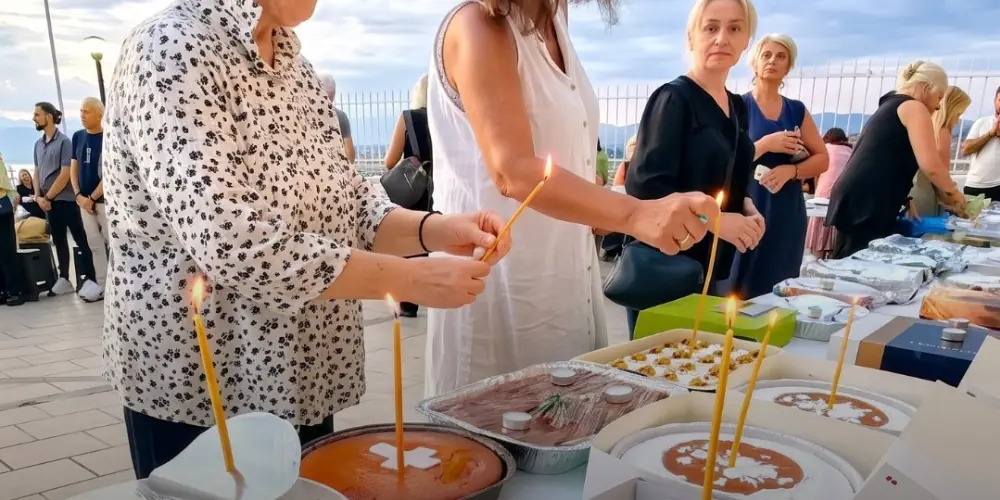
For many Greek Orthodox Christians, losing something can mean more than misplacing a set of keys. It can also mean losing hope, love, courage, opportunity, or peace of mind. Each year, thousands of people turn to St. Fanourios, a saint associated with finding what has been lost, and mark his feast day with a traditional orange-flavored cake called Fanouropita.
The main celebrations take place at the Church of St. Fanourios, about 10 kilometers (6 miles) northwest of Athens. Pilgrims gather with homemade cakes that priests bless during services. The cakes are then shared with other worshippers as part of the feast.
The Saint of Lost Things
St. Fanourios has a special place in Greek Orthodox tradition. His name is linked to the Greek word for revealing or making something known, which explains his title, “The Revealer.” His followers ask for help with many kinds of loss.
Maria Chanioti, 66, has taken part in St. Fanourios celebrations since she was young. She prepared her Fanouropita with fresh orange juice and a small amount of nutmeg, following a family tradition. An icon of the saint and a vigil candle stood nearby as she mixed the ingredients.
Chanioti said people often turn to St. Fanourios when they carry emotional pain. Some prayers concern family matters, education, or hopes for a better future. A request may involve a grandchild, a young relative’s success at school, or something missing from everyday life.
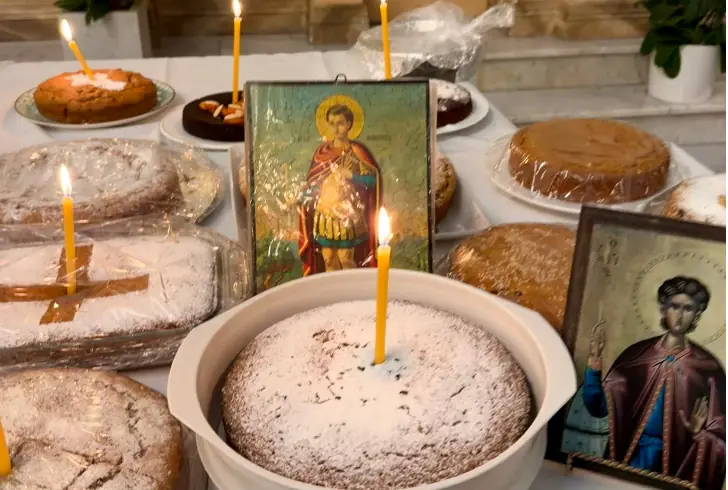
“The important things in life are love, understanding, to have optimism and to be free of sadness,” Chanioti said. “That’s more important than money.”
Orthodox Christians often view saints as spiritual companions who offer examples of faith and courage. Different saints have different associations. Saint Nicholas, for example, traditionally watches over sailors and fishermen, while people pray to Saint Paraskevi for eye ailments.
Who Was St. Fanourios?
St. Fanourios is especially connected with the Greek island of Rhodes. More than 500 years ago, an icon showing his suffering as a Christian martyr was discovered there. He later became the patron saint of Rhodes’ main town.
His feast day is celebrated mainly in Greece and Cyprus. The observance usually takes place on August 27, when worshippers bring Fanouropita to churches for a blessing.
The cake carries a religious meaning, but its ingredients remain simple. Recipes vary between families, and priests bless different versions.
What Goes Into Fanouropita?
A traditional recipe from the Church of St. Fanourios includes:
- 4 cups self-rising flour
- 1 teaspoon cinnamon
- 1 cup vegetable oil
- 1 cup plus 2 tablespoons sugar
- 12 tablespoons orange juice
- ½ cup water
- Lemon zest to taste
- ½ cup golden raisins
– ½ cup black raisins
- ½ cup coarsely chopped walnuts
The flour and cinnamon are mixed first. Oil, sugar, orange juice, water, and lemon zest are whisked separately. The dry ingredients then go into the liquid mixture, followed by the raisins and walnuts.
The batter goes into a greased, lightly floured 12½-inch baking tin. It bakes at 170 to 180 Celsius, or about 350 Fahrenheit, for around 45 minutes. After cooling, some people add powdered sugar. The cake is traditionally allowed to rest for about 24 hours before serving.
Private Wishes and Small Revelations
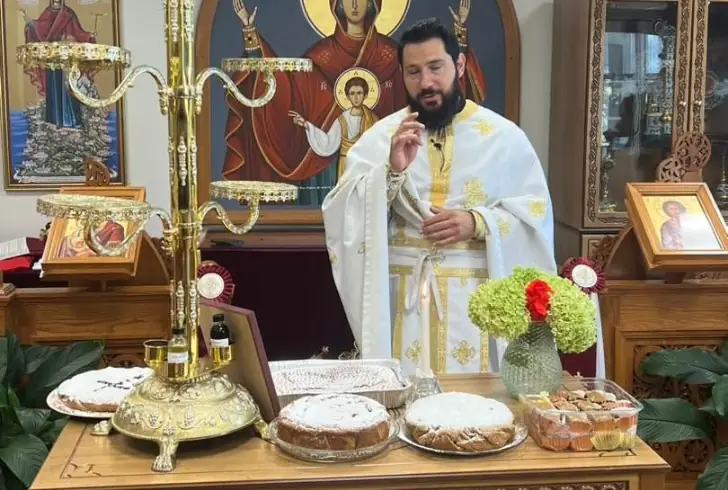
Father Nikolaos Vlavianos welcomed parishioners and blessed their cakes during the celebrations. Thousands gathered around outdoor tables near the church. A fair also featured vendors selling items such as toys, clothes, and grilled meat.
People rarely reveal their wishes, even to close family members. Father Nikolaos has heard requests involving illness, bankruptcy, parking problems, and even disappointing soccer results.
He believes the tradition helps people think about loss with greater moral clarity. At the same time, he warns against treating prayer as a way to obtain personal rewards.
“If someone prayed to win the lottery, that would have no spiritual benefit and would not go anywhere,” he said.
He also described the importance of recognizing unexpected moments in life. Everyday experiences can sometimes feel meaningful, even when people dismiss them as coincidence.
A Tradition Centered on Hope
Fanouropita represents more than a familiar Greek cake. For worshippers, it connects food, prayer, community, and personal hopes. The wishes may concern something physically lost, but they can also involve relationships, family, health, confidence, or a chance to move forward.
The annual celebration of St. Fanourios gives those concerns a shared place within Orthodox tradition. Cakes are blessed, divided, and offered to others, turning private prayers into a communal religious practice.
The tradition continues because its meaning reaches beyond the search for lost objects. St. Fanourios is associated with moments when something hidden becomes known or something missing is found. For many worshippers, that idea applies to emotional and spiritual struggles as much as everyday problems.
The cake provides a simple ritual for expressing those hopes. A familiar recipe, a church blessing, and a private wish come together each year around the feast of St. Fanourios.