
Bond yields are climbing again across major economies, and the move is starting to draw attention far beyond Wall Street.
Higher yields can raise borrowing costs for households and businesses, while also increasing the return available to savers. At the same time, the rise is renewing questions about government debt, inflation and how much borrowing financial markets can absorb.
For Americans, the bond market can have a direct effect on everyday finances. Treasury yields help influence mortgage rates, auto loans, savings returns and investment values. So, when yields move higher, the effects can reach far beyond government debt markets.
Why Are Bond Yields Rising?
Several forces are pushing yields higher. Inflation is one of the biggest concerns. Fighting in the Middle East has pushed oil prices higher, which could add fresh pressure to consumer prices. When investors expect inflation to remain high, they often demand higher yields to protect their returns.
Government borrowing is another factor. Annual U.S. budget deficits remain well above pre-pandemic levels. That means the government needs to issue more debt to cover its spending.
Large technology companies are also borrowing heavily to finance the data centers needed for artificial intelligence. More borrowing across the economy can add pressure to interest rates.
Federal Reserve policy is also keeping investors alert. On Friday, Federal Reserve Chair Kevin Warsh indicated that the central bank could still raise its short-term interest rate in the coming months if inflation remains stubbornly high.

The move in bond yields has attracted attention from policymakers. Treasury Secretary Scott Bessent announced an unusual intervention in the bond market last month aimed at limiting the rise in longer-term yields.
Robin Brooks, a senior fellow at the Brookings Institution, said Bessent’s actions and Warsh’s focus on inflation have probably kept long-term rates lower than they otherwise might have been.
“You should care because this stuff under the surface is really bubbling,” Brooks said. “And you can tell it is because policymakers are starting to get pretty agitated.”
Bessent offered a calmer assessment Tuesday during a conversation with Fox Business host Larry Kudlow on the sidelines of the G20 finance ministers’ meeting in Asheville, North Carolina.
“I don’t think we are in any kind of a dire situation,” Bessent said. He also pointed out that bond yields in several other countries have increased more sharply.
How the Bond Market Works
The bond market can seem complicated, but the basic idea is simple.
Governments and large companies raise money by selling debt to investors. The investor provides money upfront, while the borrower agrees to repay it with interest. Debt that lasts for many years is generally called a bond. U.S. government debt with shorter maturities is commonly classified as bills or notes.
After a bond is issued, investors can trade it. The interest payment generally stays fixed, but the bond’s market price can change.
When a bond becomes less attractive, its price may fall. For example, a bond that once sold for $100 might later trade for less. A new investor buying it at the lower price can earn a higher percentage return from the same interest payments.
That percentage return is known as the bond yield.
This creates an important relationship: bond prices and yields generally move in opposite directions.
Investors Are Selling Bonds
Bond markets around the world have faced selling pressure. When investors sell bonds or reduce their purchases, bond prices fall. As prices decline, yields rise.
The trend is visible across several major economies.
Inflation in the 21-nation euro zone reached 3.3% in August, according to the European Union’s statistical agency. That was the highest level in three years. Investors now expect the European Central Bank to raise its short-term interest rate at its next meeting.
German 10-year bond yields have already reached 3.35%, their highest level in more than 15 years. In the United Kingdom, 10-year government bonds are paying 5.14%, moving toward levels last seen around the 2008-2009 global financial crisis.
Japan has also seen borrowing costs rise.
Much of the concern traces back to the pandemic. Governments increased spending to support workers and businesses during COVID-19. However, spending and borrowing have remained high even after the emergency period ended.
Brooks said investors may be questioning whether current levels of government borrowing can continue indefinitely. Higher yields can serve as compensation for the additional risk investors believe they are taking.
Wars in Ukraine and Iran have added to broader global uncertainty.
“You’re dealing with a global sell-off which goes back to this kind of global stimulus that we had during COVID,” Brooks said. “The chickens for that are now coming home to roost.”
What Higher Yields Mean for Americans
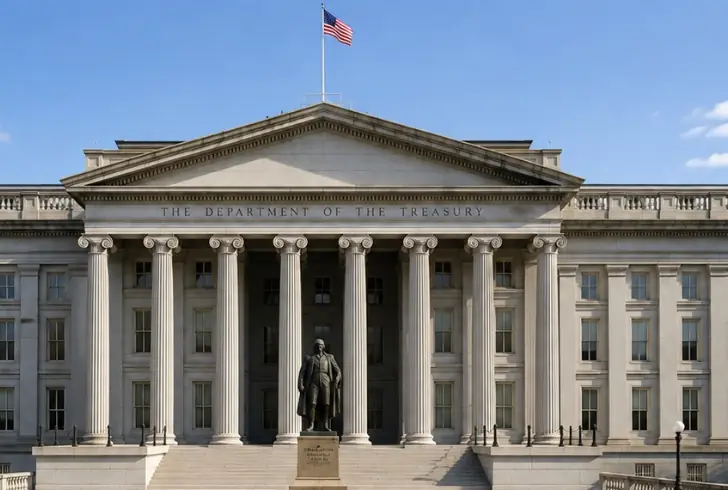
The U.S. Treasury market plays a major role in setting borrowing costs throughout the economy.
Mortgage rates provide one of the clearest examples. Thirty-year fixed mortgage rates tend to follow the direction of 10-year Treasury yields. On Tuesday, the 10-year Treasury yield reached 4.80%, its highest level since early 2025.
The five-year Treasury yield also climbed to 4.55%, its highest point since October 2025. That maturity is often used as a benchmark for auto loans.
Higher rates can make buying a home or vehicle more expensive. They can also discourage borrowers from taking on new debt.
However, higher yields are not bad for everyone. Savers can benefit when banks and other financial institutions offer better returns. People holding money in high-yield savings accounts may earn more as interest rates rise.
Investors can see mixed effects. Higher Treasury yields can make safer government debt more attractive compared with stocks, gold and cryptocurrencies. If Treasurys offer better returns, investors may become less willing to pay high prices for riskier assets.
U.S. Debt Remains a Major Concern
Worries about government borrowing have been building for years. Federal Reserve officials, economists and investors have repeatedly warned that the U.S. government is spending far more than it collects.
Last month, the Congressional Budget Office estimated that the federal budget deficit would exceed $2 trillion this year. That would equal roughly 6% of the U.S. economy, a level rarely seen outside periods such as wars and recessions.
The government’s total debt also reached about $40 trillion last month. That figure represents the accumulated result of years of federal deficits.
The larger question is whether investors could eventually reach a point where they lose confidence in government debt. A sudden sell-off in Treasurys could send yields sharply higher and create broader financial pressure.
That tipping point, however, does not appear to have arrived.
Yields have increased, but not at a pace that clearly signals a bond-market panic. Strategists at Macquarie also noted that a market measure tracking concerns about possible government defaults across several major economies has not risen excessively.
Rising bond yields can affect everyday finances, from mortgage and car loan costs to savings returns and investment prices. Their recent increase reflects inflation concerns, heavy government borrowing, corporate debt issuance and uncertainty over future interest rates.
The move does not signal an immediate financial crisis, but continued increases could keep borrowing costs high and put greater pressure on governments to address deficits and inflation.