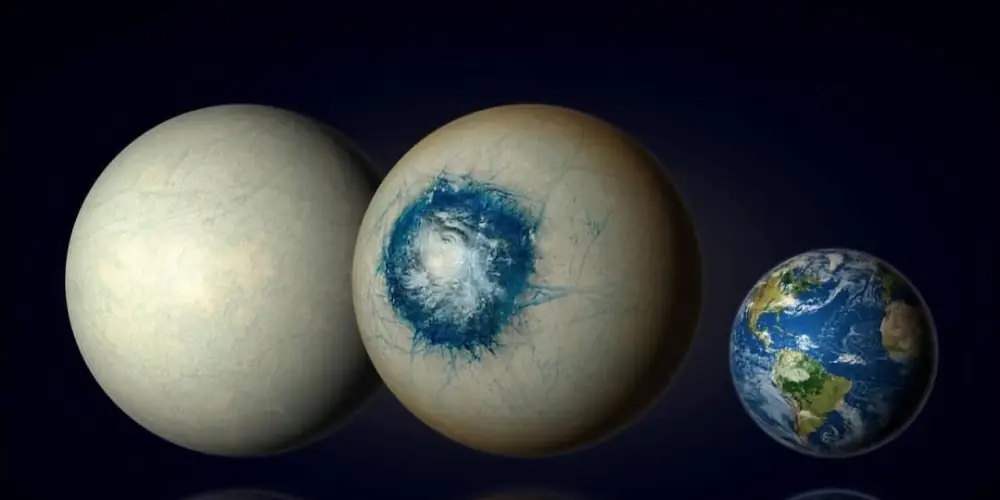
The search for planets beyond the solar system has entered an exciting new chapter. For decades, astronomers have searched the skies for a world that shares key features with Earth, including the right temperature, a protective atmosphere, and the ability to support liquid water.
A newly published study in Science has brought that goal much closer. Researchers have identified LHS 1140b, a planet located only 48 light-years from Earth, that appears to have many of the ingredients associated with a potentially habitable world.
Although no evidence of life has been detected, the discovery places LHS 1140b among the strongest candidates for future studies focused on the possibility of life beyond Earth. The findings also suggest that similar planets may be more common than previously believed.
A Planet That Stands Out
Astronomers discovered the first confirmed exoplanet in 1992, orbiting a pulsar about 2,300 light-years from Earth. Since then, observations from both ground-based and space telescopes have identified more than 6,200 exoplanets. These discoveries have led scientists to believe that nearly every star in the universe may host at least one planet.
Those planets vary greatly in size and composition. Some are massive gas giants similar to Jupiter, while others are small rocky worlds like Earth and Mars. Scientists searching for life, however, focus on planets that orbit within the habitable zone, where temperatures may allow liquid water to exist on the surface.
According to the new research, LHS 1140b meets many of those requirements. It is a rocky planet with a confirmed atmosphere and orbits within the habitable region of its parent star, making it one of the most promising worlds identified so far.
Can LHS 1140b Support Life?
A planet must satisfy several conditions before scientists consider it a possible home for life. Surface temperatures should allow water to remain liquid. An atmosphere is also needed to keep that water from escaping into space while protecting the surface from harmful radiation.
Collin Cherubim, a planetary scientist at the University of Chicago and lead author of the study, explained the significance of those conditions.
“A living world has got to be the right temperature to sustain liquid water on the surface, and it has to have an atmosphere to hold that water in place and to shield the surface from ionizing radiation. LHS 1140b has all three of these things. That puts it at the forefront for studying astrobiology and habitability and looking for life outside the solar system.”
These characteristics have made the planet a leading target for future astronomical observations.
How LHS 1140b Was Discovered
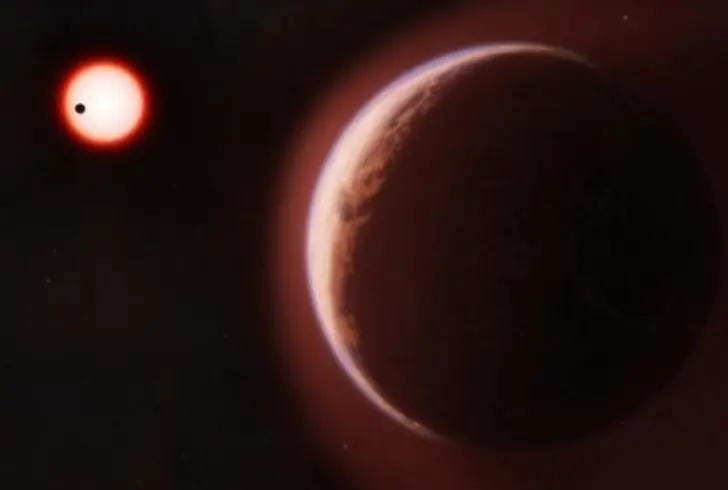
LHS 1140b was first identified in 2017 using the transit method, one of the most reliable techniques for finding planets outside the solar system.
As a planet passes in front of its host star, it blocks a tiny fraction of the star’s light. Even though the change is extremely small—comparable to removing a single light bulb from a display of 10,000 bulbs—modern telescopes can detect that difference. The timing of these repeated dips reveals how long the planet takes to complete one orbit, while the amount of blocked light helps determine its size.
Scientists also studied the planet using the radial velocity method, which measures the slight movement, or wobble, of a star caused by the gravitational pull of an orbiting planet. This technique allowed researchers to calculate the planet’s mass.
A Rocky World Orbiting a Red Dwarf
LHS 1140b circles a red dwarf star, a type of star that is smaller and cooler than the Sun. Red dwarfs usually have surface temperatures ranging from 3,100°F to 5,800°F, compared to approximately 10,000°F for the Sun. These stars are extremely common and are believed to make up nearly 75% of all stars in the Milky Way.
Since red dwarfs produce less heat, planets must orbit much closer to remain warm enough for liquid water. LHS 1140b follows that pattern. The planet orbits its star at a distance of about 9 million miles, while Earth remains roughly 93 million miles from the Sun.
Researchers estimate that LHS 1140b is about 1.7 times the diameter of Earth and approximately 5.6 times more massive. It completes one orbit every 24.7 days, much faster than Earth’s 365-day journey around the Sun.
Evidence of an Atmosphere
Finding an atmosphere was one of the most important parts of the investigation. To predict whether one existed, Collin Cherubim developed a computer model while completing doctoral research in Earth and planetary sciences at Harvard University.
The model combined information about the planet’s diameter, density, age, gravity, and orbital period. It predicted that LHS 1140b should have an atmosphere containing helium, with some of that gas escaping into space.
Scientists then tested the prediction using additional transit observations. As starlight passed through the planet’s atmosphere during transit, specific wavelengths were absorbed by atmospheric gases. Those absorption patterns revealed the presence of helium, confirming that the planet is surrounded by an atmosphere.
Cherubim explained the observation process.
“When the planet passes in front of the star, some of that starlight filters through the atmosphere of the planet. If there are any molecules or atoms like helium in the planet’s atmosphere, they can absorb or block very specific wavelengths of light.”
The helium signal matched the computer model, providing strong evidence that the atmosphere is real.
What Could Be Inside the Atmosphere?
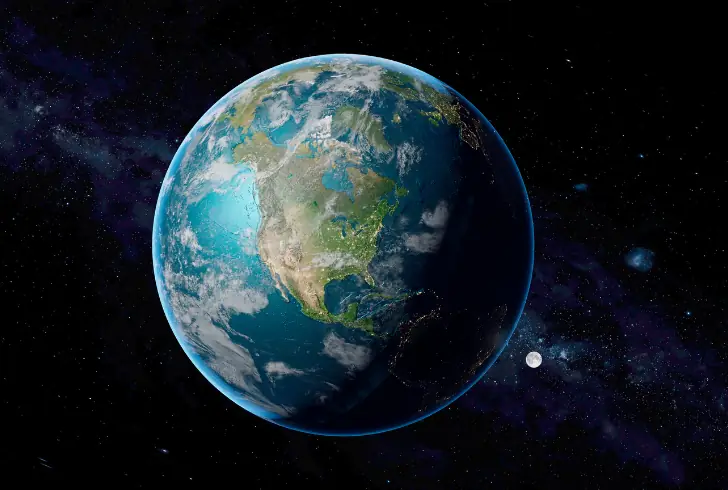
Helium alone does not create conditions suitable for life. On Earth, the atmosphere is dominated by nitrogen and oxygen, along with smaller amounts of carbon dioxide, methane, water vapor, and other gases.
The climate models for LHS 1140b suggest a more complex atmosphere beneath the helium layer.
Cherubim noted that computer simulations predict carbon dioxide as the second most abundant gas, along with carbon monoxide, small amounts of molecular oxygen (O₂), and significant amounts of water.
He said:
“My models do predict carbon dioxide to be the second most abundant gas, and carbon monoxide to be present, and also small amounts of O₂ molecular oxygen. From our climate modeling, we’ve also predicted a lot of water on this planet.”
While those predictions still require confirmation, they point toward environmental conditions that deserve closer study.
A Calmer Star Improves the Planet’s Chances
Many red dwarf stars produce powerful bursts of X-rays and ultraviolet radiation, which can strip away planetary atmospheres or make life difficult to develop.
One well-known example is Proxima Centauri b, located 4.25 light-years away. Scientists estimate that the planet receives up to 400 times more X-ray radiation than Earth, making its surface far less favorable for biology.
LHS 1140b appears to orbit a much quieter star. Researchers estimate that it receives only about 10 times Earth’s X-ray exposure, a level that does not automatically rule out the possibility of life.
Cherubim explained the difference by saying:
“Right now on LHS 1140B, the amount of X-ray flux would not really be threatening to life as we know it at all.”
The reduced radiation makes the planet a stronger candidate for future habitability research.
Scientists have not found evidence of life on LHS 1140b, and its habitability remains under investigation. Even so, its rocky composition, confirmed atmosphere, and signs of water-related conditions make it one of the most promising exoplanets for future research.
Upcoming observations with more powerful telescopes are expected to provide deeper insights into the planet’s atmosphere and surface environment. Each new study will help scientists better understand whether worlds like LHS 1140b can support the conditions needed for life beyond the solar system.