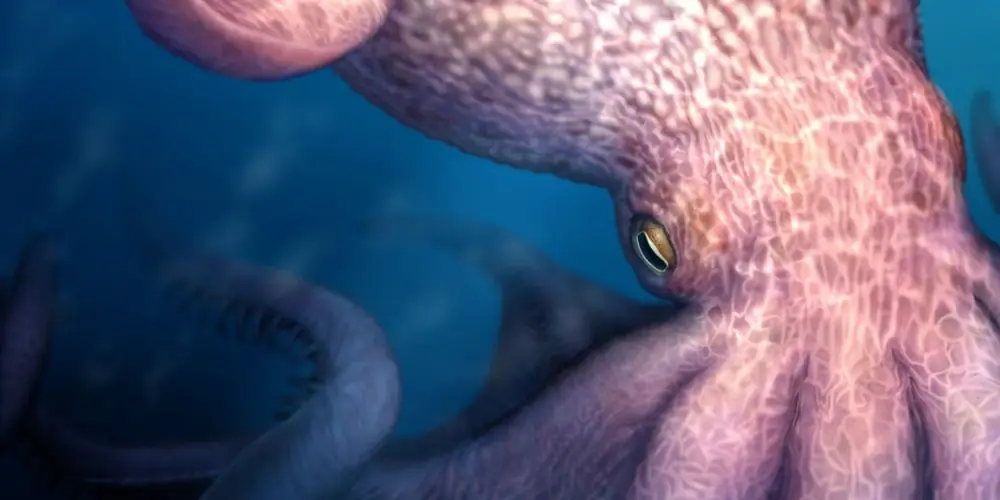
The ancient oceans may not have belonged solely to giant reptiles after all. New fossil evidence points to enormous finned octopuses—often compared to mythical krakens—that stretched up to 62 feet long and hunted as dominant predators during the age of dinosaurs.
These findings reshape long-held ideas about marine life in the Cretaceous period and introduce a powerful invertebrate contender at the top of the food chain.
Scientists analyzing fossilized remains have uncovered clues that these octopuses were not only massive but also highly capable hunters. The research, published on April 23 in the journal Science, highlights how these creatures likely crushed hard-shelled prey using strong, specialized jaws.
Combined with their size and intelligence, this placed them among the most formidable predators of their time.
Rethinking the Cretaceous Food Chain
The Cretaceous period, spanning from 145 million to 66 million years ago, has long been associated with dominant marine reptiles such as mosasaurs and plesiosaurs. However, this new research challenges that narrative.
“These findings revise the view of the Cretaceous ocean as a world dominated only by large vertebrate predators,” said study co-author Yasuhiro Iba, a paleontologist at Hokkaido University in Japan. He added, “They show that giant invertebrates — octopuses — also occupied the top of the food web.”
This shift matters because apex predators influence how entire ecosystems develop. When a species dominates, prey species adapt with defenses like thicker shells or faster movement.
Understanding who held that top position helps explain how marine environments functioned millions of years ago.
Fossil Clues From Ancient Jaws
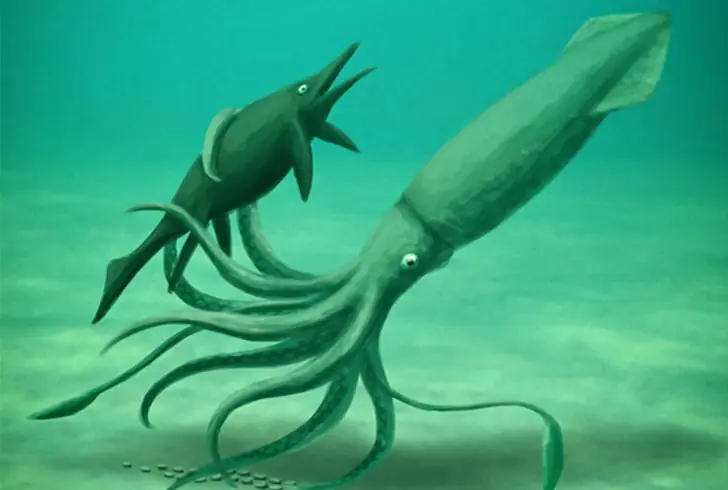
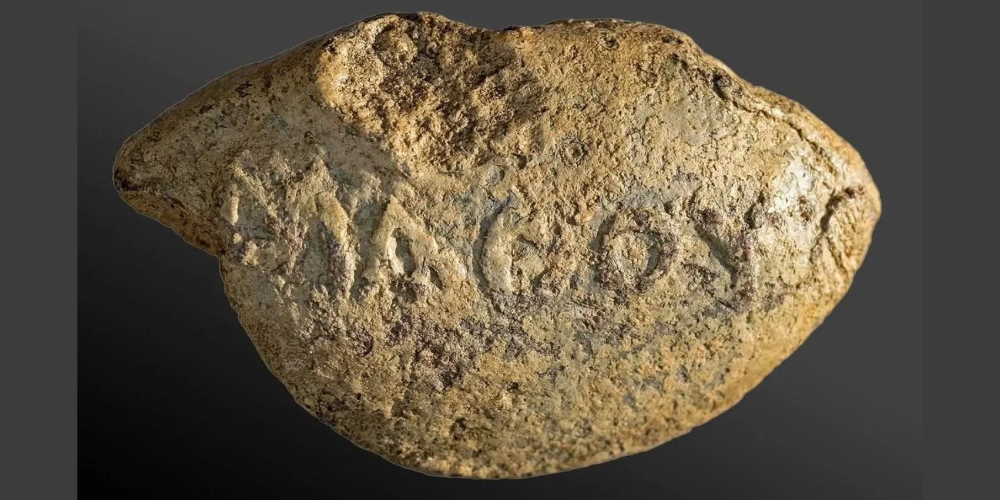
Octopuses rarely leave behind fossils due to their soft bodies. That makes any preserved evidence especially valuable. To address this gap, researchers revisited 15 fossilized octopus jaws discovered earlier in Japan and Vancouver Island. They also identified 12 new fossil jaws in Japan using advanced digital fossil-mining techniques.
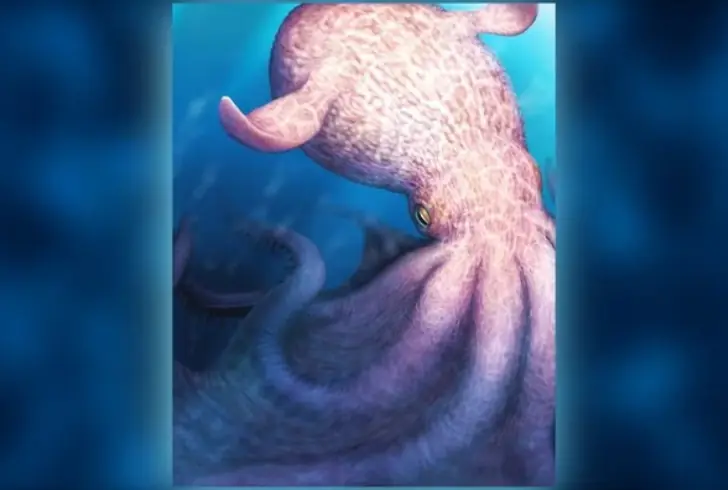
Together, these fossils revealed two extinct species of finned octopuses: Nanaimoteuthis jeletzkyi and Nanaimoteuthis haggarti.
The fossils of N. jeletzkyi date back between 100 million and 72 million years ago. This pushes the known timeline of octopuses further into the past by about 5 million years. It also extends the history of finned octopuses by roughly 15 million years.
“Octopuses are known today as highly intelligent animals, but they are extremely difficult to study in deep time because they lack hard external shells,” Iba explained. “A major motivation for this study was to reveal this almost invisible history of octopuses.”
How Big Were These Ocean Giants?
To estimate the size of these ancient creatures, researchers compared fossil jaw structures with those of modern octopuses. In living species, mantle size—the rounded body section above the eyes—relates closely to jaw dimensions. Total body length in long-bodied finned octopuses is typically about 4.2 times the mantle length.
Using this relationship, scientists calculated the possible sizes of these extinct species. The results suggest a wide range:
Nanaimoteuthis jeletzkyi: approximately 10 to 26 feet long (3 to 8 meters)
Nanaimoteuthis haggarti: approximately 23 to 62 feet long (7 to 19 meters)
At its upper estimate, N. haggarti could be the largest invertebrate ever identified. It rivals or exceeds the size of many well-known marine animals. For comparison, the modern giant squid (Architeuthis dux) reaches about 40 feet, while some mosasaurs grew to roughly 56 feet.
These figures place the kraken-like octopus among the largest organisms in Cretaceous oceans.
Evidence of Powerful Hunting Behavior
The fossilized jaws revealed more than just size. They also showed clear signs of heavy use. Many jaws had worn-down tips, with one side ground down by up to 10% of their total size.
This pattern suggests these octopuses repeatedly crushed hard-shelled prey, likely using a dominant side of their jaws. That kind of asymmetry points to lateralized behavior, which is often linked to higher intelligence in animals.
“These were not just giant octopuses, but giant, intelligent, and highly formidable marine predators,” Iba stated.
Such feeding habits indicate a diet that may have included armored marine animals, reinforcing the idea that these creatures held a top-tier position in their ecosystem.
Scientific Debate Around Size and Role
While the discovery has drawn attention, not all experts fully agree with the size estimates. Some researchers caution that the calculations rely on averages derived from modern species, which may not perfectly match extinct ones.
René Hoffman, a paleontologist at Ruhr University Bochum in Germany, noted that the method used involves “error prone” assumptions about how jaw size relates to overall body length. This introduces a broad range of possible sizes rather than a precise figure.
Christian Klug, a paleontology professor at the University of Zurich, also acknowledged the uncertainty. He stated, “There is no doubt that Nanaimoteuthis was a huge and efficient predator,” but warned that focusing only on maximum estimates may overlook the possibility that some individuals were smaller.
Additionally, large size alone does not guarantee apex predator status. Other factors, including speed, behavior, and competition, also influence dominance within an ecosystem.
A New Perspective on Ancient Oceans
Despite these debates, the study offers a compelling new view of life in the Cretaceous seas. The presence of massive, intelligent invertebrates alongside well-known marine reptiles suggests a more complex and competitive environment than previously assumed.
The discovery also raises new questions. How did these octopuses grow so large? Did similar or even bigger species exist after the Cretaceous period? And how did they interact with other predators of their time?
Ongoing research and improved fossil analysis techniques may provide clearer answers in the future.
The identification of giant kraken-like octopuses adds a striking dimension to the story of prehistoric oceans. These creatures were not just large—they were active hunters with the tools and behavior needed to dominate their environment.
While some uncertainty remains around their exact size and ecological role, the evidence points to a powerful presence that challenges traditional views of marine hierarchy during the age of dinosaurs.