Scientists exploring the North Sea recently uncovered a geological mystery buried deep beneath layers of ancient sediment. Instead of finding the usual stacked sequence of rocks and sand, researchers discovered massive formations where the natural order appears reversed. These sections look like Earth’s layers have been flipped upside down, with younger, heavier sand sitting below lighter, older material.
A Discovery Hidden Beneath the Seafloor
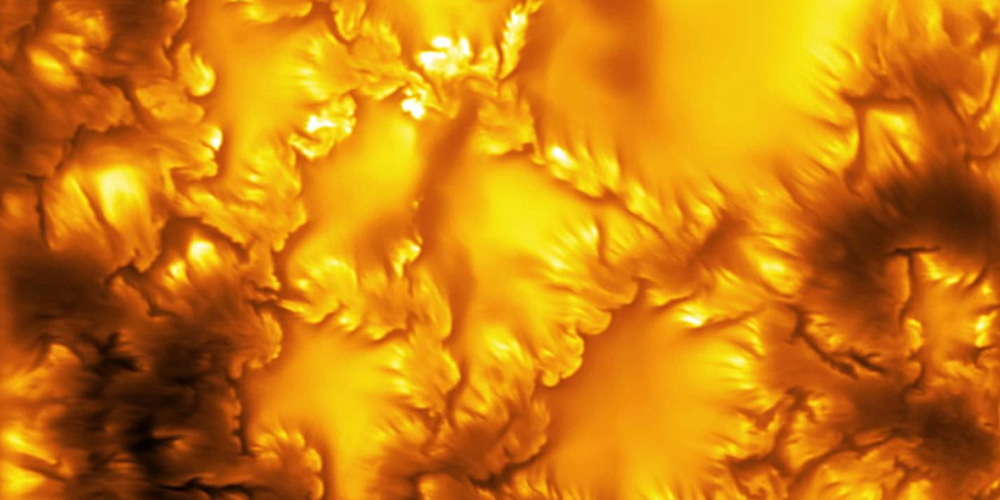
The research, published in Communications Earth & Environment, came from a collaboration between the University of Manchester and Norwegian energy firm Aker BP. Using seismic imaging, the team detected enormous formations they named “sinkites,” which are dense sand masses that sank through softer layers. However, the lighter sediments that landed on top are known as “floatites.”
This reversal is known as stratigraphic inversion. While geologists have seen smaller examples before, the North Sea findings revealed hundreds of these inverted structures stretching across kilometers of seafloor.
How Did the Layers Flip?
Normally, Earth’s structure follows a simple rule: older material stays below, while younger layers pile on top. But in this case, the scans showed the opposite. Scientists believe the phenomenon occurred around 5.3 million years ago, during the transition from the Miocene to the Pliocene epoch.
At that time, a crust made of microscopic marine fossils likely sat above a dense sand layer. Earthquakes or geological pressure may have broken apart the fragile upper crust, forcing the heavier sand to punch through and sink downward. As a result, massive sections of seafloor ended up inverted. Over millions of years, normal sediment settled over the site, concealing the unusual formations until modern technology revealed them.
A New Perspective on Seafloor Instability
Beyond scientific curiosity, these discoveries hold real-world significance. Scientists can reshape strategies for carbon capture and underground storage by understanding how sinkites and floatites formed. These structures also reveal insights for oil exploration because they show how dynamic and unpredictable the seafloor can be.
Researchers already recognized that the ocean floor lacks stability, but this discovery shows it may involve even more complexity than they previously believed. By studying these ancient flips, scientists can better predict how geological layers will behave under pressure, and that knowledge could play a vital role in future energy and environmental projects.
The North Sea findings remind us that the planet still delivers extraordinary surprises, even in long-studied places. Ordinary layers of sand and fossils revealed a window into dramatic shifts that shaped the seafloor millions of years ago.
As seismic imaging advances, researchers may uncover more hidden reversals that add to the story of how Earth constantly reshapes itself.