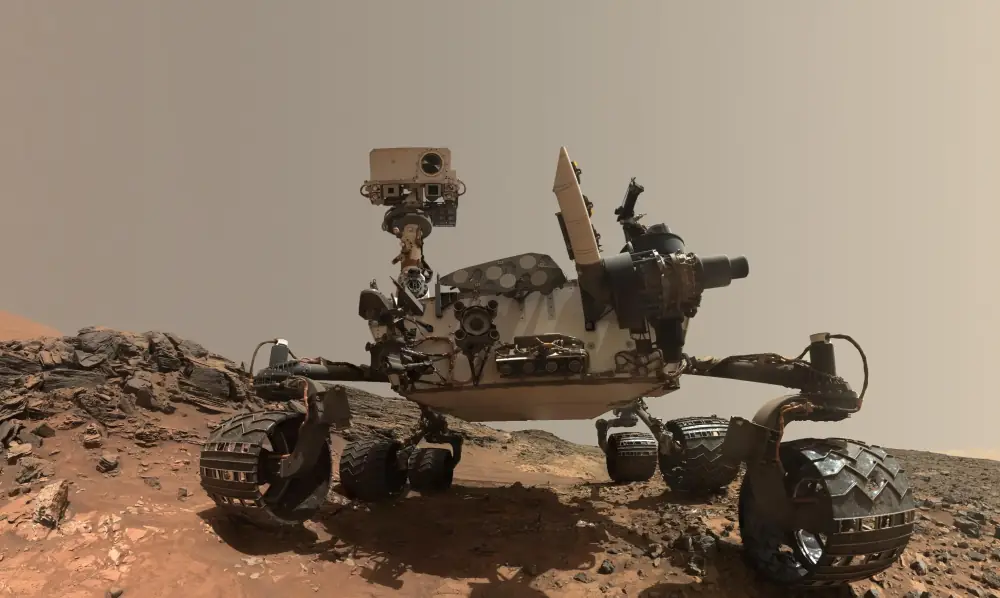
Mars just dropped a major clue. NASA’s Perseverance rover has found what might be the clearest hint of ancient life on the Red Planet. The discovery comes from a 2024 rock sample taken from a dry riverbed in Jezero Crater, and it has scientists buzzing. The rock, once part of a lakebed billions of years ago, may hold a biosignature, a chemical sign of life.
If confirmed, this would be the biggest breakthrough in the five-decade-long search for life on Mars. NASA’s acting Administrator, Sean Duffy, didn’t hold back, calling it “the closest we have ever come to discovering life on Mars.” That is no small statement coming from the space agency that has been at this for half a century.
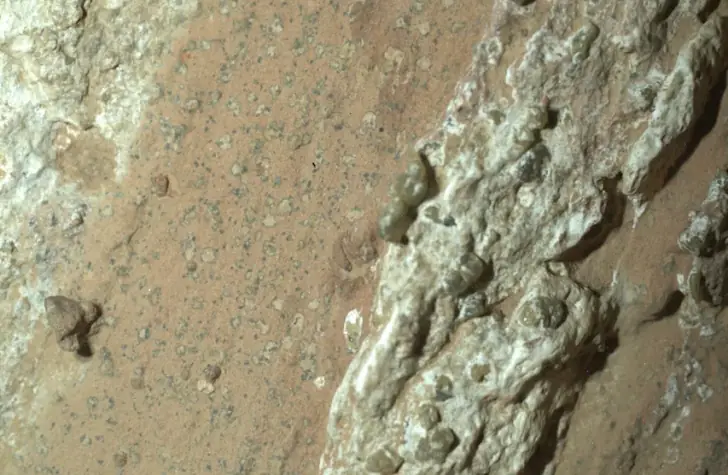
Scientists say it will take years of lab work and more missions to figure out exactly what we are looking at.
Mars’ Best Shot at Preserving Ancient Life
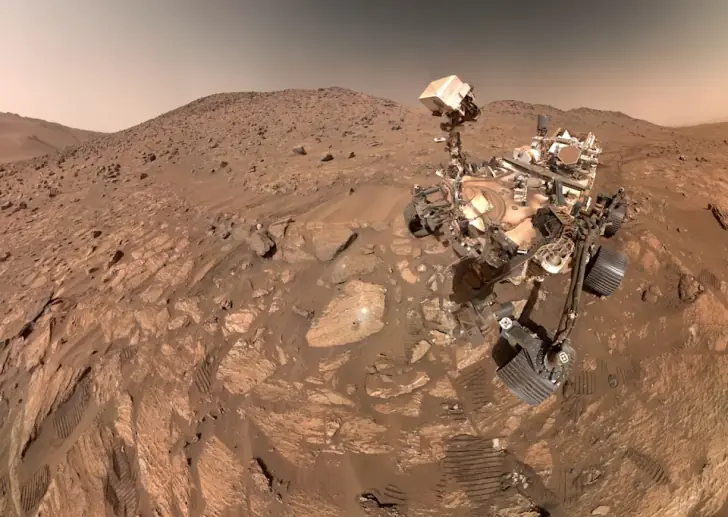
The Jezero Crater has always been a hot spot for scientists. Long ago, it was filled with water, making it a perfect place to search for signs of life. When the Perseverance rover landed there, it was sent straight to areas that looked like river deltas. That is where it found the reddish rock that is now turning heads across the world.
The sample came from layered sediment, the kind that forms slowly in still water. That makes it one of the best places to preserve life – if it ever existed. In other words, if Mars had bugs, bacteria, or anything else alive back then, this is where they might have left their mark.
NASA’s team says the rock shows possible biosignatures. That means something in the chemistry points to life. However, certain natural, non-living processes can also produce similar chemical traces. So now, scientists are working hard to rule those out. Until then, they won’t call it life. Not yet.
Lindsay Hays, a senior scientist at NASA, explained that the discovery of life would overturn everything we know about biology and the universe. If life popped up on Mars, it could mean life isn’t rare. It might mean life sparks up anywhere the conditions are just right. That could change how we think about our place in space.
One of the biggest challenges is that Perseverance can’t do all the testing on its own. The rover has limited tools. The best way to confirm the biosignature is to bring the sample back to Earth. That is going to take time and coordination. A future mission, possibly in the 2030s, will attempt to collect the sample and bring it to Earth.
NASA’s search for water, and now life, on Mars started back in the 1970s with the Viking landers. Since then, every mission has added a piece to the puzzle. Now, with Perseverance, we might be closer than ever to seeing the full picture.