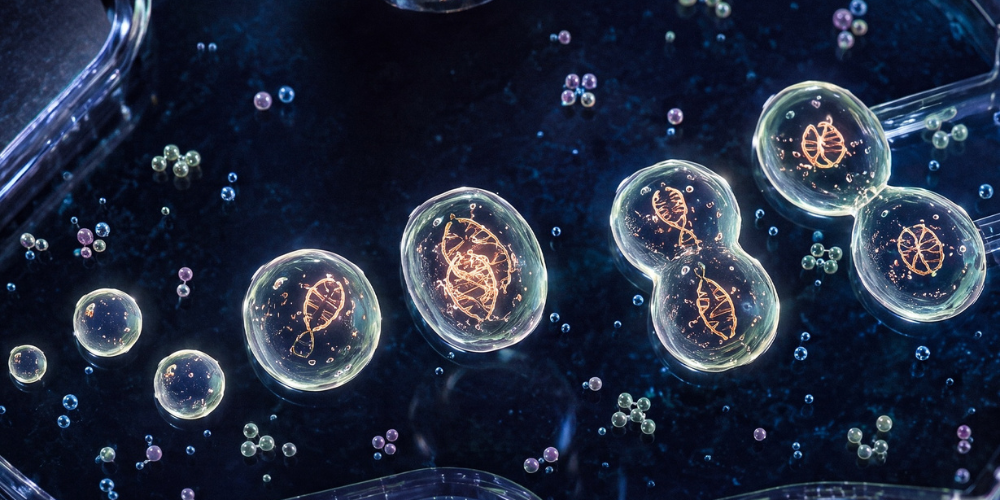
For decades, the hunt for extraterrestrial life has captured global attention. Massive space missions, advanced rovers, and billion-dollar research programs all share one goal: finding proof that life exists beyond Earth.
Yet a growing number of scientists believe the biggest obstacle may not be technology. The real problem could be the way humanity searches for life in the first place.
A recent paper published in the journal “Nature Astronomy” argues that scientists may be overlooking signs of alien biology because of strict testing methods, scientific caution, and fear of making the wrong call.
Researchers warn that possible evidence of life on Mars and other worlds may already exist in collected data, yet it remains ignored or dismissed before receiving deeper investigation.
The Mars Discovery That Shocked the World
One of the most famous moments in space science took place on Aug. 7, 1996, when NASA announced that researchers had found “strong circumstantial evidence that life once existed on Mars.” The discovery came from a Martian meteorite that contained tiny tube-shaped structures resembling fossilized bacteria.
The announcement created worldwide excitement. Television broadcasts stopped regular programming to cover the story, while President Bill Clinton addressed the nation from the White House Rose Garden.
Clinton described the meteorite as a rock that “speaks to us across billions of years and millions of miles.” He added that if the discovery proved true, it would become one of the most significant scientific findings in history.
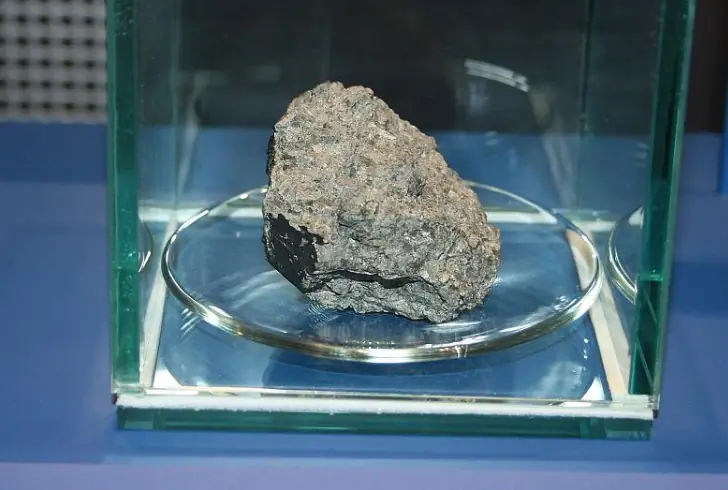
The excitement faded after additional testing showed the formations could also form through non-biological geological processes. Scientists eventually ruled out the evidence as proof of alien life.
That event became a major lesson for exobiologists, who study life beyond Earth. Since then, researchers have become extremely cautious about announcing discoveries too early. Still, some experts now believe this caution may have created another problem: false negatives.
When Scientists Miss the Signs
A false positive happens when researchers mistake natural chemical or geological activity for biology. A false negative is the opposite. It occurs when actual signs of life are ignored, misread, or rejected.
According to the “Nature Astronomy” paper, false negatives receive far less attention because the consequences seem less urgent. Missing evidence of alien microbes does not create an immediate crisis the way mistakes in medicine or environmental science might.
The study’s lead author, Inge Loes ten Kate, professor of astrobiology and planetary science at Utrecht University and the University of Amsterdam, warned that these overlooked possibilities deserve much more scientific attention.
“We should be aware of these false negative results,” Ten Kate explained in a statement released with the paper. “It means there are shortcomings in recognizing the existence of life.”
Researchers behind the study believe modern missions may already contain hidden evidence waiting for reevaluation. Data from Mars, Saturn’s moon Enceladus, Jupiter’s moon Europa, and distant exoplanets could hold biological clues that scientists dismissed too quickly.
The Viking Missions Still Raise Questions
The debate over missed evidence dates back nearly 50 years. NASA’s Viking 1 spacecraft landed on Mars on July 20, 1976, while Viking 2 arrived on Sept. 3, 1976. Both missions carried experiments designed specifically to search for microbial activity in Martian soil.
The spacecraft collected soil samples and exposed them to nutrients, water, and heat. Scientists monitored the reactions closely to see whether the soil released radioactive carbon gases or absorbed carbon monoxide and carbon dioxide. Those changes could suggest biological metabolism.
Some tests produced reactions that looked surprisingly similar to microbial activity. Yet scientists ultimately dismissed the findings because chemical reactions without life could also explain the results.
Ten Kate later noted that no mission seriously revisited those findings with newer technology.
“There has never been a mission that looked further into that,” she said during a conversation with “TIME.” She also expressed interest in seeing future missions return to those earlier experiments.
The unanswered questions surrounding Viking remain one of the strongest examples of how strict scientific standards can sometimes block deeper exploration.
Why Detection Methods May Be Failing
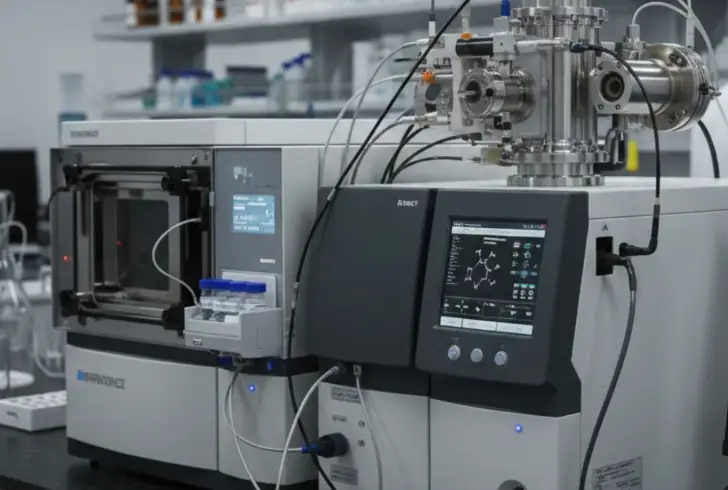
Another issue involves the instruments used to search for life. Even advanced tools can struggle to separate biological signals from background environmental chemistry.
For example, gas chromatograph mass spectrometers are often used to identify atmospheric compounds linked to life. Yet certain gases may overlap during analysis. Methane and carbon dioxide can sometimes appear similar in readings, making biosignatures harder to confirm.
That overlap creates room for uncertainty, especially on distant planets where data collection opportunities are limited.
Ten Kate stressed that scientists must study alien environments from several angles instead of depending on one narrow method.
“We really have to look at an environment from all different viewpoints,” she explained. “We should be conducting our studies differently from the way we’re conducting them now.”
The concern becomes even more important as modern missions explore icy moons and rocky exoplanets that may contain underground oceans or hidden microbial ecosystems.
Perseverance’s Unusual Mars Rock
Fresh debate emerged after NASA’s Perseverance rover discovered a strange rock in an ancient Martian river delta in September 2025. The rock contained red, green, blue, and purple streaks along with tiny dark specks and faded yellow markings described as leopard-like spots.
Perseverance instruments identified iron-rich mud, phosphorus, sulfur, and other chemical materials that microbes on Earth commonly use as energy sources.
Scientists also noted that similar color patterns on Earth often appear after microbial activity. The finding quickly became one of the strongest modern cases for possible ancient life on Mars.
Then-acting NASA Administrator Sean Duffy called it “the closest we have ever come to discovering life on Mars.”
Still, the discovery remains incomplete because researchers cannot fully examine the rock on Mars. Proper analysis would require either astronauts on the Martian surface or a mission capable of returning the samples to Earth.
The Mars Samples Now Sit Uncollected
Since landing on Mars in 2021, Perseverance has stored soil and rock samples inside titanium tubes placed across the Martian surface. Those samples were expected to become part of NASA’s Mars Sample Return mission.
That plan changed after funding for the mission was removed from the fiscal 2026 budget. As a result, the sample tubes remain on Mars without a confirmed retrieval mission.
Scientists consider this delay a major setback because laboratory testing on Earth could answer questions current rover instruments cannot solve.
Ten Kate still believes those samples remain valuable opportunities instead of lost causes. Better understanding of Martian environments could eventually prevent future false negatives.
Searching for Life Without Destroying It

The paper also raises concerns about how scientists conduct life-detection experiments. Some testing methods may accidentally destroy fragile organisms before researchers recognize them.
During the Viking missions, scientists added water-rich nutrient solutions to Martian soil. If microbes existed and were adapted to extremely dry conditions, that sudden exposure could have killed them.
Ten Kate pointed out that certain Earth microbes survive by absorbing moisture directly from the atmosphere. Immersing those organisms in liquid would be fatal.
That possibility has forced researchers to reconsider how alien life might behave in harsh planetary environments. Organisms on Mars or icy moons may follow biological rules very different from those found on Earth.
A Smarter Approach to Future Missions
Caution still guides space biology, especially after the 1996 Mars meteorite episode that led to a highly publicized scientific reversal. That history keeps researchers careful, but it also raises concern that hesitation could delay meaningful discoveries when data looks promising.
Exploration missions targeting Mars, Europa, Enceladus, and exoplanets continue to gather potential biosignatures. However, experts highlight a growing concern: life-detection systems must be designed not only to avoid false positives but also to reduce the risk of missing real evidence.
The “Nature Astronomy” study points toward stronger scientific frameworks, encouraging broader testing methods and more flexible interpretation of unusual results rather than relying on narrow assumptions.
While false positives remain a concern, false negatives may quietly limit progress in astrobiology. Signals that appear unclear today could gain significance with improved analysis and updated models.
As exploration expands, a key challenge remains: potential signs of extraterrestrial life may already exist in collected data, but current methods may not always recognize them.