
The question of whether life exists beyond Earth has fascinated humanity for centuries. From early telescopic observations of Mars to modern space missions that uncover distant worlds, the search has been filled with breakthroughs, mistakes, and renewed optimism.
What started as speculation has grown into one of the most serious scientific pursuits of our time, driven by the simple idea that if Earth harbors life, other planets made of the same cosmic ingredients might, too.
The Early Fascination with Life on Mars
In the late 19th century, astronomers believed Mars could be home to an advanced civilization. Italian astronomer Giovanni Schiaparelli first mapped dark lines across the Martian surface, calling them canali—a word that later fueled misunderstandings.
American astronomer Percival Lowell interpreted these markings as irrigation canals, suggesting intelligent beings had designed them. For decades, the theory shaped public imagination and scientific debate.
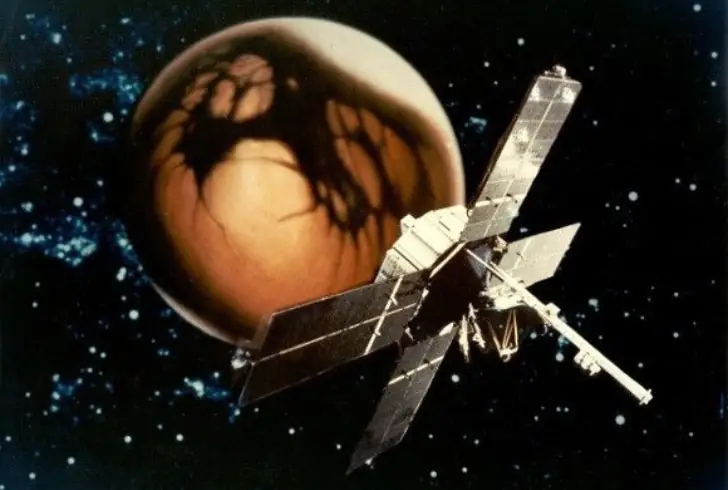
That excitement began to fade when better telescopes revealed those “canals” were optical illusions. Later, in 1965, NASA’s Mariner 4 mission sent back images of a barren, cratered Mars, eliminating hopes for canal-digging civilizations. The dream of Martian architects dissolved, but the broader search for extraterrestrial life only expanded.
The Paradox of Silence
By the mid-20th century, questions about extraterrestrial life had become more structured. In 1950, physicist Enrico Fermi raised a famous question: If intelligent civilizations are common, why hasn’t humanity heard from them? This became known as the Fermi paradox. Scientists debated whether advanced civilizations self-destruct, rarely form, or simply choose not to broadcast their presence.
Radio astronomy offered new tools to investigate. In 1960, Frank Drake launched Project Ozma, scanning nearby stars for artificial signals. The most famous detection came in 1977, when a strong 72-second signal—later dubbed the “Wow! Signal”—was recorded. Excitement surged, but it was never repeated, leaving the search inconclusive.
Discoveries That Shifted Perspective
While radio silence disappointed many, new astronomical findings reignited curiosity. In 1992, researchers discovered the first planets orbiting a pulsar. Although inhospitable, these detections proved planets beyond our solar system exist. The real revolution came with NASA’s Kepler mission in 2009, which revealed thousands of exoplanets. Today, astronomers know planets are common across the galaxy, and many fall within the “habitable zone” where liquid water could exist.
This progress made an old idea more convincing: if planets are abundant, the possibility of life cannot be dismissed. Scientists still wrestle with unknowns, such as how life begins and how long civilizations survive, but the discovery of countless worlds has made the universe feel less empty.
Key factors shaping the search:
1. Exoplanets – Thousands identified, many Earth-sized.
2. Habitability – Growing evidence that conditions suitable for life are widespread.
3. Technology – Telescopes capable of detecting atmospheric gases that may hint at biology.
Life Thriving in Harsh Conditions
Clues from Earth also shape expectations. In the 1960s, researchers discovered extremophiles—organisms that survive in extreme environments such as boiling hot springs, deep-sea vents, and radioactive pools. These findings revealed that life is more adaptable than once believed.
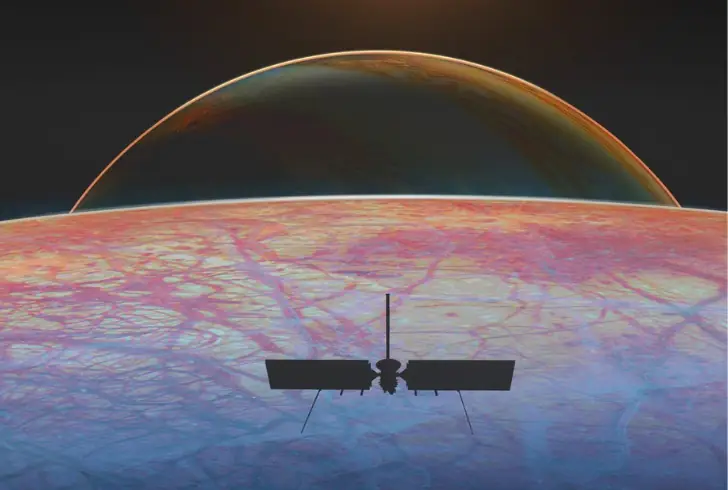
This has shifted focus toward icy moons and hidden oceans. Europa, a moon of Jupiter, and Enceladus, orbiting Saturn, show signs of liquid water beneath their frozen surfaces. Even Mars, though dry on the surface, may hide microbial life in underground reservoirs. If tiny organisms can thrive in such places on Earth, it is reasonable to think they may exist elsewhere.
The Ongoing Quest for Answers
The search for extraterrestrial life has been a cycle of excitement and disappointment. Early hopes of Martian civilizations gave way to the reality of barren landscapes, only for new discoveries to revive optimism. The universe is vast, and humanity now knows it is filled with planets, some strikingly similar to our own.
Whether the first confirmed discovery is a signal from an advanced civilization or a microbe hidden beneath Martian ice, the impact will be profound. The search continues because the possibility of life elsewhere is more than a scientific puzzle—it is a reflection of the human desire to know if we are truly alone.
Why the Search for Life Still Matters
Every discovery, whether confirming a barren world or hinting at habitability, pushes science forward. The pursuit keeps raising new questions: How common is life? Can civilizations last long enough to connect across the stars? And what does the presence of even simple microbes beyond Earth mean for humanity’s place in the universe?
The search has proven unpredictable, filled with both false leads and astonishing breakthroughs. Yet it continues to inspire, reminding us that the possibility of life beyond Earth is not just science fiction—it is a scientific endeavor shaping the future of exploration.