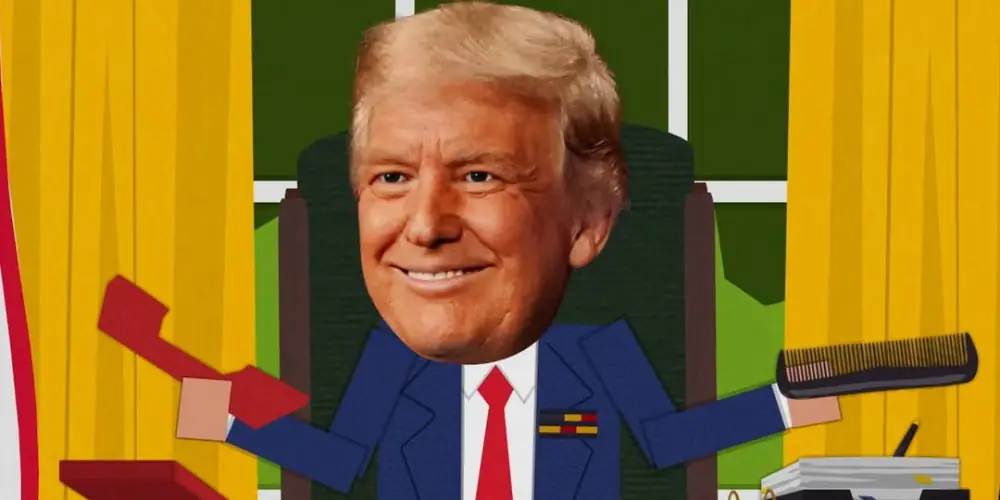
Season 27 of South Park doesn’t just poke at politics—it tears into the spectacle of Donald Trump’s return to center stage with the same reckless precision that’s kept the show culturally alive for nearly three decades. What’s striking is how the satire feels both exaggerated and uncomfortably plausible, like a carnival mirror that doesn’t distort so much as highlight the absurdities already on display.
Political Satire Meets Real-World Commentary
The show has lampooned everyone from Tom Cruise to Kanye, but the spotlight this season is firmly on Trump and the culture orbiting him. The season premiere drills down on his legal entanglements, his constant litigation as a weapon, and the way he treats religion as political branding.
The humor lands because the episodes don’t invent madness—they remix the existing headlines into something sharper. When the writers drag in corporate media’s awkward ties to lawsuits and settlements, it reminds viewers that Trump’s world isn’t operating in a vacuum. The satire isn’t just about him but about the system that props him up.

Focusing on Immigration, AI, and Tech Excess
The second and third episodes widen the lens. Immigration becomes the canvas: ICE raids in the fictional town escalate to cartoonish proportions, showing children hauled off during school plays or citizens caught up in bureaucratic snares. Instead of flattening the issue into a one-note gag, the show leans into the personal consequences—how fear reshapes families and communities, even inside a satirical universe.
Then comes the skewering of AI and tech culture. Randy Marsh, a character who has pivoted through dozens of schemes over the years, decides his cannabis farm should become “AI-integrated.” What follows is a send-up of our obsession with algorithms that solve nothing but still attract investors.
Towelie, the perpetually stoned sidekick, becomes a half-baked mascot of this experiment, fumbling through jargon he barely understands. The dig here isn’t subtle: our trust in “smart tools” often masks the fact that they’re only echoing human foolishness.
Unfiltered Humor and Free Expression
One of the reasons South Park still feels current in its 27th season is its willingness to move at the speed of outrage. Episodes are written and animated in weeks, sometimes days, which lets Parker and Stone mock Trump’s latest move before the ink dries on the news reports. That rapid-fire production schedule keeps the show fresher than most political commentary shows on cable.
Of course, this approach comes with risks. Politicians rarely take kindly to being lampooned so bluntly, and networks often second-guess anything that might scare advertisers.
Yet Parker and Stone have a track record of weathering that storm. They’ve never pretended to be neutral, and in a way, that bluntness is what buys them freedom. When you know you’re going to be skewered no matter what, there’s no point in lobbying for a flattering portrayal.
The Ongoing Relevance of “South Park”
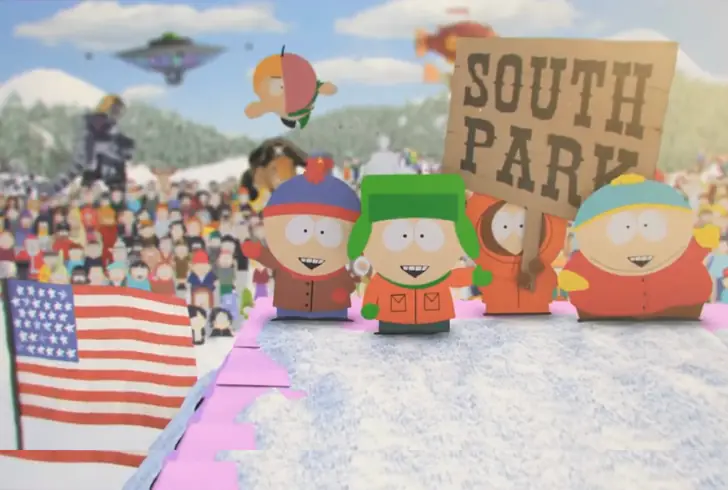
If you step back, the bigger story isn’t just that Trump is a central character again. It’s that South Park is still able to tap into the cultural bloodstream at a time when attention spans are shorter and political satire often drowns in noise. The show isn’t interested in offering solutions, and it doesn’t claim moral superiority.
What it does well is force its audience to look at the ridiculousness of power—whether that’s a president deploying troops against phantom threats or a tech executive reassuring the world that AI will save us while quietly cashing in.
That’s why the humor still hits: it mixes vulgarity with an oddly precise understanding of how politics, media, and culture feed each other. Season 27 proves the show can still juggle slapstick gags about talking towels with biting political critique, and somehow make them part of the same conversation. For a series that has spent decades mocking authority, that continuity is its greatest punchline.