Modern crocodiles are usually imagined gliding through rivers or resting motionless along muddy banks. Their broad bodies, short limbs, and deliberate movements reinforce the image of a patient ambush predator. Fossils, however, point to a much different history. During the Late Triassic, some crocodile relatives were built for speed and spent their time moving across dry land instead of lying in wait near water.
These ancient reptiles had long legs, upright stances, and lean frames made for quick movement. Rather than slipping into rivers, they actively pursued prey over open ground. Fossil discoveries from Britain suggest some early crocodylomorphs behaved more like agile, fast-running mammals than the crocodiles we know today.
Their body design reflects a powerful example of convergent evolution, where unrelated animals develop similar traits when adapting to comparable environments.
A Swift Predator of the Late Triassic
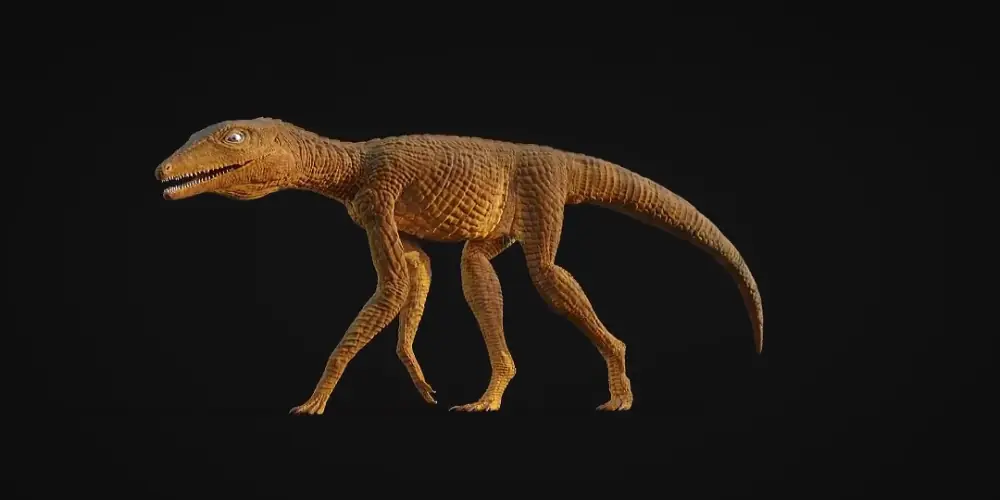
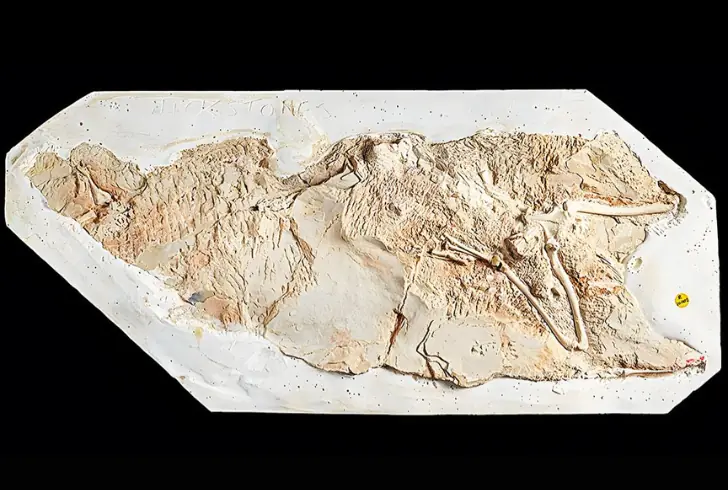
One notable example is Galahadosuchus jonesi, a proposed crocodylomorph species that lived roughly 215 million years ago in what is now southwest Britain. Fossil remains discovered in quarries near Gloucester indicate that this predator measured under five feet in length.
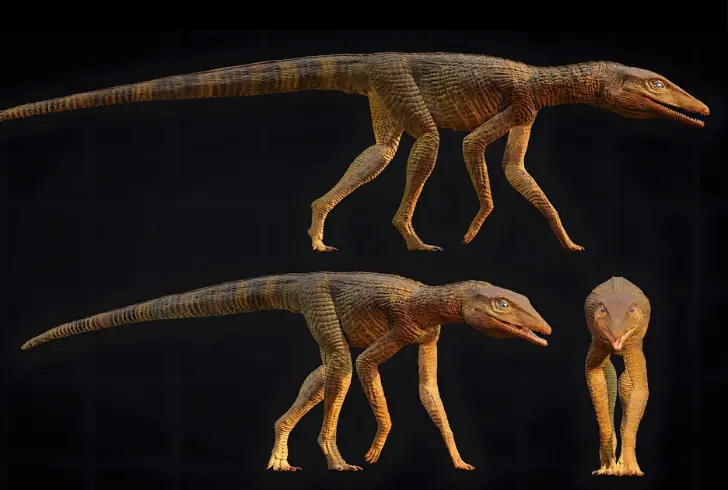
Its skeletal structure reveals a body built for quick movement on land. Unlike modern crocodiles, whose legs spread outward from the body, this animal held its limbs directly beneath its torso. That upright stance resembles the posture of mammals such as dogs.
The skull was light and narrow, while the body remained slender. These traits reduce weight and improve stride efficiency. Evidence from limb bones, hips, and ankles indicates that some early crocodile relatives were cursorial quadrupeds, meaning they ran on all four limbs with agility and balance.
Such anatomy suggests that these reptiles hunted actively on land. They likely pursued small animals through vegetation and uneven ground.
Fossil Clues Behind the Running Ability
Paleontologists rely on detailed skeletal analysis to understand how these reptiles moved. Even small bone fragments can reveal movement patterns.
Studies of early crocodylomorph fossils show several important features:
The forelimbs were only slightly shorter than the hindlimbs, which suggests these animals ran on all four legs rather than shifting to two. Both limb pairs supported body weight during movement.
The wrist bones were elongated, creating stronger and more stable forelimbs. This design reduced flexibility but increased stride power. The hands were compact and tightly built, which likely helped stabilize the body during rapid movement.
Another distinctive feature is the crurotarsal ankle joint, a hallmark of early crocodile relatives. This joint allowed strong forward propulsion while maintaining stability during quick turns.
Together, these anatomical traits indicate a springy, controlled running gait that helped these reptiles maneuver across rough terrain.
Prehistoric Britain Was Very Different
When early crocodylomorphs lived in Britain, the environment looked nothing like the modern countryside. The region consisted of rift basins, seasonal floodplains, and patches of dry upland ground formed under a warmer climate.
Large permanent swamps were less common. Instead, the terrain included intermittent waterways, exposed soil, rocky areas, and scattered vegetation. This patchwork of habitats created ideal conditions for agile land predators.
Prey animals included small vertebrates such as early mammals, reptile species similar to lizards, and amphibians. These animals often hid in rocks, cracks, or brush. As a result, predators needed speed and precision to capture them.
Heavy armor or slow ambush tactics offered limited advantage in such settings. Instead, speed, balance, and quick directional changes became valuable survival traits.
Why Some Crocodiles Resembled Greyhounds
The comparison to a greyhound highlights a classic evolutionary pattern called convergent evolution. This occurs when unrelated species develop similar features in response to similar environmental pressures.
Greyhounds and other sighthounds evolved for high-speed pursuit hunting. Their bodies share several defining traits: long, slender legs; lightweight frames; flexible spines that extend stride length; and narrow bodies designed for speed.
Some early crocodylomorphs evolved traits similar to those of reptiles and mammals, even though reptiles and mammals share a distant ancestry. Natural selection favored individuals that could accelerate quickly, maintain speed, and pivot while chasing prey.
Over time, these pressures shaped reptiles with streamlined bodies and efficient running mechanics.
How Modern Crocodiles Differ
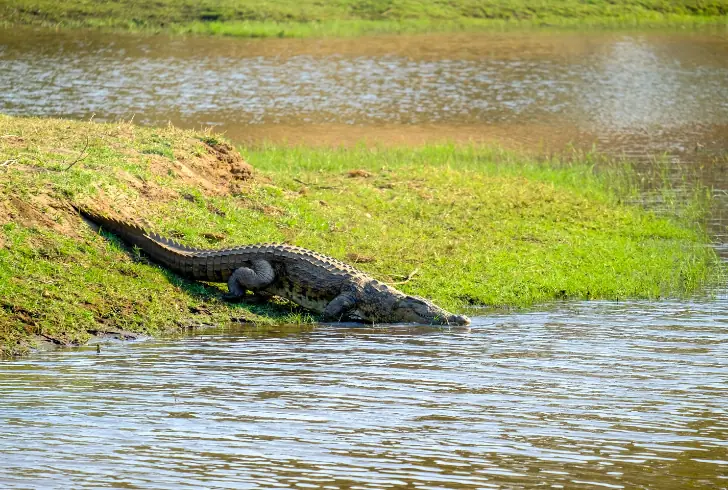
Today’s crocodiles, alligators, and gharials belong to a group known as crocodyliforms, and they lead very different lifestyles. Most living species are semi-aquatic carnivores that spend much of their time in freshwater rivers, lakes, and wetlands.
Their body structure clearly reflects a life centered around water. Modern crocodiles carry broad, low-set bodies that stay close to the ground, paired with short legs that extend outward from the sides rather than standing directly beneath them. A strong, muscular tail drives powerful movement through water, while webbed feet help stabilize and steer them during swimming.
These reptiles usually hunt through ambush tactics. They remain partially submerged, then strike rapidly when prey approaches the shoreline.
Living crocodilian species show clear differences in skull design. Gharials have long, narrow snouts ideal for catching fish, while alligators use broader jaws to tackle larger, stronger prey. Still, their shared body structure points to a lifestyle rooted in water.
When Water Shaped the Crocodile Body
The move into semi-aquatic environments gradually altered crocodile anatomy over time. Species that hunted in water began to share a set of defining features.
Their eyes and nostrils shifted upward on the skull, letting them watch and breathe while staying mostly submerged. A secondary palate evolved as well, allowing them to keep breathing even with prey clamped in their jaws underwater.
At the same time, muscular tails became a key tool for propulsion.
Even with these adaptations, crocodiles haven’t lost their ability to function on land. Their bodies reflect a compromise between two worlds rather than a full commitment to either.
That balance persisted because ambush hunting along river edges consistently paid off across a wide range of habitats.
Crocodile Relatives Once Explored Many Body Types
Fossil records show that crocodylomorphs once displayed far more diversity than their modern descendants. Different species adapted to many ecological roles.
Some ancient forms became fully marine predators. These reptiles possessed paddle-like limbs and flattened, fish-like tails built for rapid swimming. One example is Torvoneustes jurensis, whose body shape resembled marine reptiles such as ichthyosaurs.
Other crocodylomorphs lived mainly on land. Certain Cretaceous notosuchians appear to have hunted terrestrial prey, though evidence of direct competition with theropod dinosaurs remains uncertain.
Some species developed unusual feeding habits. Fossil evidence suggests that some forms may have consumed plant matter, while others filtered small organisms from the water.
This variety shows that crocodile relatives experimented with many evolutionary paths before modern forms became dominant.
Body shapes similar to greyhounds appear repeatedly in animals adapted for pursuit hunting. Cheetahs, pronghorns, and several antelope species show comparable proportions.
These animals share elongated limbs, streamlined torsos, and efficient stride mechanics. Early crocodylomorphs with similar builds likely occupied comparable ecological roles.
They probably hunted alone rather than in packs. Current evidence indicates no coordinated group hunting. Instead, these reptiles likely depended on speed, reaction time, and agility to capture prey.
Extinction Event That Changed Evolution
Around 200 million years ago, near the end of the Triassic Period, the world experienced major environmental disruption. Massive volcanic eruptions linked to the breakup of the supercontinent Pangaea released enormous amounts of gas into the atmosphere.
These eruptions triggered severe climate shifts and caused a large extinction event. Many reptile groups vanished during this period.
Dinosaurs later expanded into newly available ecological niches. Crocodylomorphs survived the crisis, though their diversity declined sharply.
After the extinction, semi-aquatic forms gradually became more dominant. Freshwater environments offered stable hunting opportunities, which likely shaped the evolutionary direction of later crocodile species.
What “Greyhound Crocodiles” Reveal About Evolution
Fossils of fast-running crocodylomorphs offer valuable insight into how species adapt to environmental conditions. These reptiles demonstrate that groups often labeled as “living fossils” once included many different forms.
Early crocodile relatives ranged from land sprinters to marine swimmers and freshwater ambush predators. Their varied body structures reflect the influence of habitat and food sources.
Convergent evolution connects these reptiles to modern mammals such as greyhounds. Similar ecological pressures repeatedly produce similar anatomical solutions, even among distant evolutionary lineages.
The story of Galahadosuchus jonesi and other early crocodylomorphs reshapes the common view of crocodile history. Instead of slow river dwellers, their ancient relatives included swift terrestrial hunters built for speed and agility.
Environmental pressures during the Triassic favored predators capable of chasing prey across dry terrain. Later shifts in climate and ecosystems pushed crocodile evolution toward semi-aquatic lifestyles.
These fossils show that crocodiles once occupied a wide range of ecological roles. Their history illustrates how habitat changes influence anatomy, behavior, and survival across millions of years.